MORTAL KOMBAT ARCADE GAME RENTAL
Planning an event with arcade games?
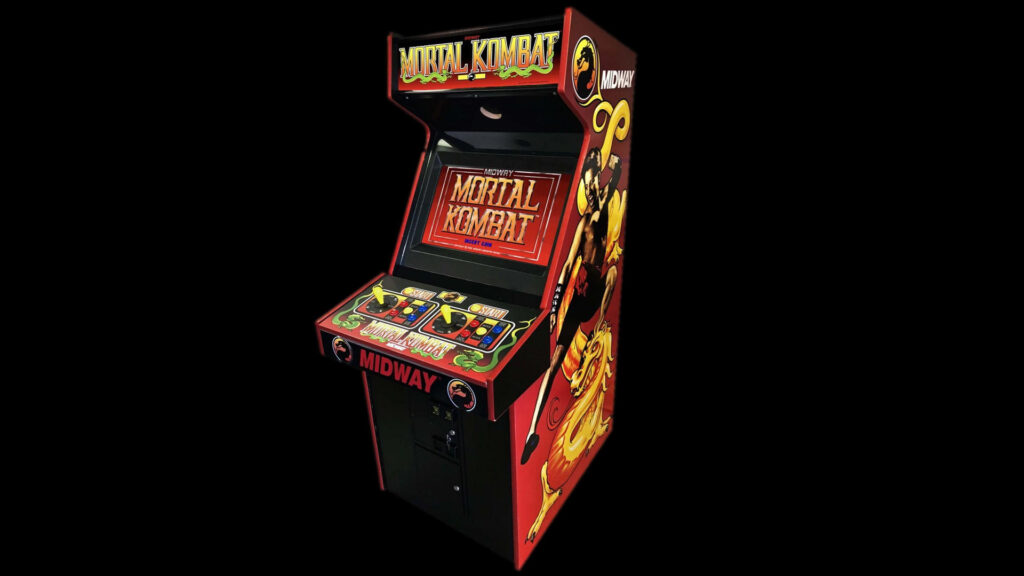
Here’s your chance to rent a real Mortal Kombat arcade machine for your next party.
Whether it’s a birthday party, corporate event, or a tradeshow, you can rent your favorite retro arcade machine for your upcoming social function. Rent your favorite retro 1980’s (eighties) classic arcade game rental for your next event in Florida.
Mortal Kombat is an American media franchise centered on a series of fighting video games originally developed by Midway Games in 1992.
The original Mortal Kombat arcade game spawned a franchise consisting of action-adventure games, a comic book series, a card game, films, an animated TV series, and a live-action tour. Mortal Kombat has become the best-selling fighting game franchise worldwide with over 100 million copies and one of the highest-grossing media franchises of all time.
The series has a reputation for high levels of graphic violence, including, most notably, its fatalities, which are finishing moves that kill defeated opponents instead of knocking them out. Controversies surrounding Mortal Kombat, in part, led to the creation of the Entertainment Software Rating Board (ESRB) video game rating system. Early games in the series were noted for their realistic digitized sprites and an extensive use of palette swapping to create new characters. Following Midway’s bankruptcy, the Mortal Kombat development team was acquired by Warner Bros. Entertainment and re-established as NetherRealm Studios.
 |
MORTAL KOMBAT GAME PLAY
The original three games and their updates, Mortal Kombat (1992), Mortal Kombat II (1993), Mortal Kombat 3 (1995), Ultimate Mortal Kombat 3 (1995), and Mortal Kombat Trilogy (1996), are 2D fighting games. The arcade cabinet versions of the first two used a joystick and five buttons: high punch, low punch, high kick, low kick, and block; Mortal Kombat 3 and its updates added a sixth “run” button. Characters in the early Mortal Kombat games play virtually identically to one another, with the only major differences being their special moves. Through the 1990s, the developer and publisher Midway Games kept their single-styled fighting moves with four attack buttons for a different array of punches, kicks and blocks. Mortal Kombat 4 was the first Mortal Kombat game in which the characters could move in three dimensions and the first to use 3D computer graphics. From Deadly Alliance to Mortal Kombat: Deception, characters had three fighting styles per character: two unarmed styles, and one weapon style. While most of the styles used in the series are based on real martial arts, some are fictitious. Goro’s fighting styles, for example, are designed to take advantage of the fact that he has four arms. For Armageddon, fighting styles were reduced to a maximum of two per character (generally one hand-to-hand combat style and one weapon style) due to the sheer number of playable characters. Mortal Kombat vs. DC Universe dropped multiple fighting styles for most characters in favor of giving each character a wider variety of special moves 2011’s Mortal Kombat returned to a single 2D fighting plane, although characters are rendered in 3D; unlike previous Mortal Kombat games, each of the controller’s four attack buttons corresponds to one of the character’s limbs, the buttons thus becoming front punch, back punch, front kick and back kick (“front” indicates the limb that is closer to the opponent, and “back” indicates the limb that is farther away from the opponent).
Mortal Kombat: Deception and Mortal Kombat: Armageddon feature “Konquest”, a free-roaming action-adventure mode. Both games include distinct minigame modes such as “Chess Kombat”, an action-strategy game. Two other bonus minigames, “Puzzle Kombat” inspired by Puzzle Fighter and “Motor Kombat” inspired by Mario Kart, feature super deformed versions of Mortal Kombat characters. The games contain various unlockable content and hidden cheats.
Finishing Moves “FATALITIES”
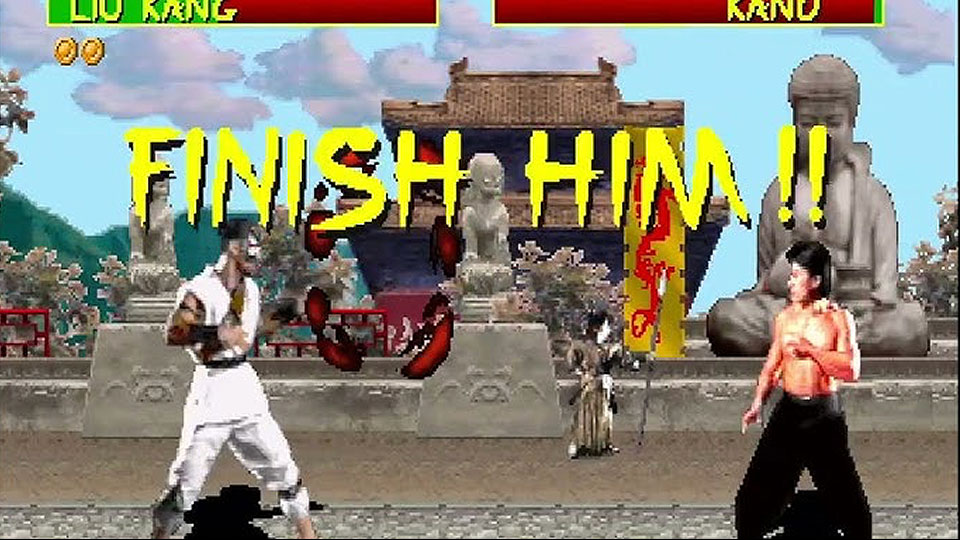
One of the most notable features of the Mortal Kombat series is its brutal and gruesome finishing moves, known as “Fatalities“. The basic Fatalities are finishing moves that allow the victorious characters to end a match by murdering their defeated, defenseless opponent. Usually Fatalities are exclusive to each character, the exception being Mortal Kombat: Armageddon, which instead features Kreate-A-Fatality, a feature that allows players to perform their own Fatalities by conducting a series of violent moves chosen from a pool that is common to all characters.
Other finishing moves in the various Mortal Kombat games include Animalities (introduced in Mortal Kombat 3), in which the victor turns into an animal to violently finish off the opponent; Brutality (introduced in Ultimate Mortal Kombat 3) which consists of bashing the opponent into pieces with a long combo of hits; and Stage Fatalities/Death Traps (introduced in the original Mortal Kombat Pit Stage where the victor can uppercut their opponent off of the platform into a bed of spikes below, later made more difficult in Mortal Kombat II by requiring a character-specific button sequence) utilizing parts of certain stages to execute a lethal finishing move (such as a pool of acid). Mortal Kombat: Deception added the Hara-Kiri, a move that allows the loser to perform a suicidal finishing move, giving way to a potential race between both players to see if the winner can finish off their opponent before they can kill themselves.
There are two non-violent finishing moves in the series, which were introduced in Mortal Kombat II as a satire to controversies surrounding Mortal Kombat: Friendship moves, which result in a display of friendship towards the enemy instead of slaughter, and Babalities, which turn the opponent into a baby.
Plot
The series takes place in a fictional universe consisting of numerous realms which, according to in-game backstories, were created by the Elder Gods, an ancient, ethereal pantheon of almighty, eternal preternatural beings. The Mortal Kombat: Deception manual described six of the realms as: “Earthrealm, home to such legendary heroes as Liu Kang, Kung Lao, Sonya Blade, Johnny Cage, and Jax Briggs, and under the protection of the Thunder God Raiden; Netherrealm, the fiery depths of which are inhospitable to all but the most vile, a realm of demons and shadowy warriors such as Quan Chi and Noob Saibot; Outworld, a realm of constant strife which Emperor Shao Kahn claims as his own; Seido, the Realm of Order, whose inhabitants prize structure and order above all else; the Realm of Chaos, whose inhabitants do not abide by any rules whatsoever, and where constant turmoil and change are worshiped; and Edenia, which is known for its beauty, artistic expression, and the longevity of its inhabitants.” The Elder Gods decreed that the denizens of one realm could only conquer another realm by defeating the defending realm’s greatest warriors in ten consecutive martial arts tournaments, called Mortal Kombat.
The first Mortal Kombat game takes place in Earthrealm (Earth) where seven different warriors with their own reasons for entering join the tournament with the prize being the continued freedom of their realm under threat of a takeover by Outworld. Among the established warriors were Liu Kang, Johnny Cage, and Sonya Blade. With the help of the thunder god Raiden, the Earthrealm warriors were victorious, and Liu Kang became the new champion of Mortal Kombat. In Mortal Kombat II, unable to deal with his minion Shang Tsung’s failure, Outworld Emperor Shao Kahn lures the Earthrealm warriors to Outworld for a do-over, winner-take-all tournament, where Liu Kang eventually defeats Shao Kahn. By the time of Mortal Kombat 3, Shao Kahn merged Edenia with his empire and revived its former queen Sindel in Earthrealm, combining it with Outworld as well. He attempts to invade Earthrealm, but is ultimately defeated by Liu Kang once more. After the Kahn’s defeat, Edenia was freed from his grasp and returned to a peaceful realm, ruled by Princess Kitana. The following game, Mortal Kombat 4, features the fallen elder god Shinnok attempting to conquer the realms and kill Raiden. He is defeated by Liu Kang.
In Mortal Kombat: Deadly Alliance, the evil sorcerers Quan Chi and Shang Tsung join forces to conquer the realms, killing series protagonist Liu Kang in the process. By Mortal Kombat: Deception, after several fights, the sorcerers emerge victorious, having killed most of Earthrealm’s warriors until Raiden steps forth to oppose them. The Dragon King Onaga, former ruler of Outworld, returned to merge all realms back together, but was eventually defeated by the game’s protagonist, Shujinko.[20]
In Mortal Kombat: Armageddon, the titular catastrophe begins. Centuries before the first Mortal Kombat, Queen Delia foretold the realms would be destroyed because the power of all of the realms’ warriors would rise to such greatness that it would overwhelm and destabilize the realms, triggering a destructive chain of events. King Argus had his sons, Taven and Daegon, put into incubation so one day they can be awakened to save the realms from Armageddon by defeating a firespawn known as Blaze. In the end, Shao Kahn is the one who defeats Blaze and wins the war, causing Armageddon.[21]
The crossover Mortal Kombat vs. DC Universe does not share continuity with the other games. After the simultaneous defeats of both Shao Kahn and the alien warlord Darkseid in the DC Universe causes both villains to fuse into the entity “Dark Kahn”, both the Mortal Kombat and DC Universes begin to merge. This brings the warriors and heroes into conflicts after suffering bouts of uncontrollable rage. The heroes and villains of both universes repeatedly battle each other, believing each other to be responsible for the catastrophe, until only Raiden and Superman remain. The two confront Dark Kahn and team up to defeat their common foe. After Dark Kahn’s defeat, the two realms defuse, with Shao Kahn and Darkseid trapped in each other’s universes to face eternal imprisonment.
In the 2011 Mortal Kombat soft reboot, the battle of Armageddon culminated in only two survivors: Shao Kahn and Raiden. On the verge of death by the former’s hand, the latter sent visions to his past self in a last-ditch attempt to prevent this outcome. Upon receiving the visions, the past Raiden attempts to alter the timeline to avert Armageddon amidst the tenth Mortal Kombat tournament, during the original game. His attempts to alter history mean that events play out differently to the original series. While he succeeds in preventing Shao Kahn’s victory with help from the Elder Gods, he accidentally kills Liu Kang in self-defense and loses most of his allies to Queen Sindel, leaving Earthrealm vulnerable to Shinnok and Quan Chi’s machinations.
Mortal Kombat X sees Shinnok and Quan Chi enacting their plan, leading an army of undead revenants of those that were killed in Shao Kahn’s invasion of Earthrealm. A team of warriors led by Raiden, Johnny Cage, Kenshi Takahashi, and Sonya Blade oppose them, and in the ensuing battle, Shinnok is imprisoned within his amulet and various warriors are resurrected and freed from his control, though Quan Chi escapes. Twenty-five years later, the sorcerer resurfaces alongside the insectoid D’Vorah to facilitate Shinnok’s return. A vengeful Scorpion kills Quan Chi, but fails to stop him from freeing Shinnok. To combat him, Cassie Cage, daughter of Johnny Cage and Sonya Blade, leads a team composed of the next generation of Earthrealm’s heroes in defeating him. With Shinnok and Quan Chi defeated, Liu Kang and Kitana’s revenants assume control of the Netherrealm while Raiden taps into Shinnok’s amulet.
Mortal Kombat 11 and its expansion, Aftermath, sees the architect of time and Shinnok’s mother, Kronika, working to alter the timeline following her son’s defeat and Raiden’s tampering with her work. In doing so, she brings past versions of the realm’s heroes to the present, aligning herself with some while the rest work to defeat her. After nearly killing Liu Kang a second time, Raiden discovers Kronika has manipulated them into fighting across multiple timelines as she fears their combined power. Despite her interference and attacks by her minions, Raiden gives Liu Kang his power, turning him into a god of fire and thunder so he can defeat Kronika. In the Aftermath expansion, it is revealed that Liu Kang inadvertently destroyed Kronika’s crown, the item needed to restart the timeline. Her defeat also revives Shang Tsung, who was absent in the base game due to his imprisonment by Kronika. To recover the crown, Liu Kang sends Shang Tsung and other Earthrealm heroes back in time to obtain it before Kronika, though Shang Tsung manipulates events so that he comes into possession of the crown. At the end, either Liu Kang or Shang Tsung becomes the Keeper of Time, depending on the player’s choice (who they want to fight with in the final battle) and the outcome of the battle.
Mortal Kombat 1, the second reboot on the series’ timeline, sees Lord Liu Kang has created his New Era and strives to maintain peace between all the realms. However, his plans begin to unravel when Shang Tsung and Quan Chi, despite his attempts to have them de-powered and unable to cause trouble, ally with General Shao in order to conquer Earthrealm and Outworld. Investigating the matter, Liu Kang discovers that the Shang Tsung from MK11: Aftermath is responsible, as Liu Kang’s attempts to access the Hourglass’ power resulted in a break where every character in Mortal Kombat‘s universe defeated Kronika and gained control of the Hourglass. In an attempt to stop the sorcerer from taking control of all of the multiple timelines, Liu Kang leads an army of good variations in an assault on Titan Shang Tsung’s dimension, where, after an intense battle with all their evil counterparts, Liu Kang and a player-decided champion defeat him and erase his timeline from existence.
Characters
Through its iterations, the series has featured scores of player characters, some of them becoming mainstays, such as Baraka, Cassie Cage, Cyrax, Ermac, Fujin, Goro, Jade, Jax, Johnny Cage, Kabal, Kano, Kenshi, Kintaro, Kitana, Kung Lao, Li Mei, Liu Kang, Mileena, Motaro, Nightwolf, Noob Saibot, Quan Chi, Raiden, Rain, Reptile, Scorpion, Sektor, Shang Tsung, Shao Kahn, Sheeva, Shinnok, Sindel, Skarlet, Smoke, Sonya Blade, Stryker, Sub-Zero and Tanya. Among them are Earth’s humans and cyborgs, good and evil deities, and denizens of Outworld and other realms.
Starting with Mortal Kombat vs. DC Universe, which featured several DC Universe heroes and villains, all subsequent games have included guest characters such as Freddy Krueger from A Nightmare on Elm Street franchise, Kratos from the God of War franchise (exclusively for PlayStation 3), Jason Voorhees from the Friday the 13th franchise, the Xenomorph from Alien, Leatherface from the Texas Chainsaw Massacre franchise, the titular character of Predator, the titular character of the Terminator franchise, the titular character of RoboCop, Spawn of Image Comics, Omni-Man from Image Comics‘s Invincible, John Rambo, Homelander from The Boys, and the Joker, who was previously in Mortal Kombat vs. DC Universe, Peacemaker (more specifically: the character from the DC Extended Universe and DC Universe), both from DC Comics, and Ghostface from the Scream franchise.
Hidden Content
Most series releases included secret characters, secret games, and other Easter eggs. The original game contained the hidden fighter Reptile, who could be fought by players if they fulfilled an exact set of requirements. A counter for ERMACS (short for error macros) on the game’s audits screen was additionally interpreted by players as referring to a second hidden character named Ermac. Midway denied the character’s existence in the series before adding him to Ultimate Mortal Kombat 3 in response to the player rumors and feedback.
Some Easter eggs originated from in-jokes among the series developers. One example is “Toasty”, which was included in Mortal Kombat II in the form of an image of sound designer Dan Forden that randomly appeared in a lower corner of the screen after a player landed an uppercut. Hidden games of Pong and Galaga were included in Mortal Kombat II and Mortal Kombat 3, respectively.
Sales
Mortal Kombat has been one of the most successful fighting game franchises in video game history, previously only trailing Bandai Namco‘s Tekken, Capcom’s Street Fighter, and Nintendo‘s Super Smash Bros. As of 2021, it has surpassed the competitor fighting game franchises in worldwide lifetime series sales. It generated more than $4 billion by the late 1990s and $5 billion in total revenue by 2000. A particularly successful game was Mortal Kombat II, which had unprecedented opening week sales figures never seen before in the video game industry, for the first time beating the box office numbers of summer hit films. The Mortal Kombat games, however, have not been localized in Japan after the Super Famicom release of Mortal Kombat II, due to content guidelines against depictions of blood, gore and dismemberment (Tobias blaming their “very americanized” character design).
Mortal Kombat games have sold more than 6 million units by 1994 and 26 million by 2007, and the figure has exceeded 30 million by 2012. As of 2022, the franchise had sold about 79 million units. By 2025, it has surpassed over 100 million copies.
The 2008 edition of Guinness World Records Gamer’s Edition awarded the Mortal Kombat series with seven world records, including “most successful fighting game series”. The franchise holds ten world records in the 2011 Guinness World Records Gamer’s Edition, including the “largest promotional campaign for a fighting video game” (Mortal Kombat 3), “highest grossing film based on a beat ‘em up video game” (Mortal Kombat 1996), and “most successful video game spin-off soundtrack album” (Mortal Kombat: Original Motion Picture Soundtrack).
*Some of the content information above was provided by Wikipedia and KLOV (Killer List of Video Games).
*Visit our main website https://cocktailhourentertainment.com
For More Information fill out our Contact Form
WHY RENT FROM US?
If you’re planning an event in Florida we’re your one-stop-shop for “extra” entertainment.
PACKAGE DISCOUNTS
Rent 3 or more games and get a special discount.
BIGGEST SELECTION
Florida’s largest selection of games for rent.
COMPETITIVE PRICING
The best pricing in Florida for game rentals.
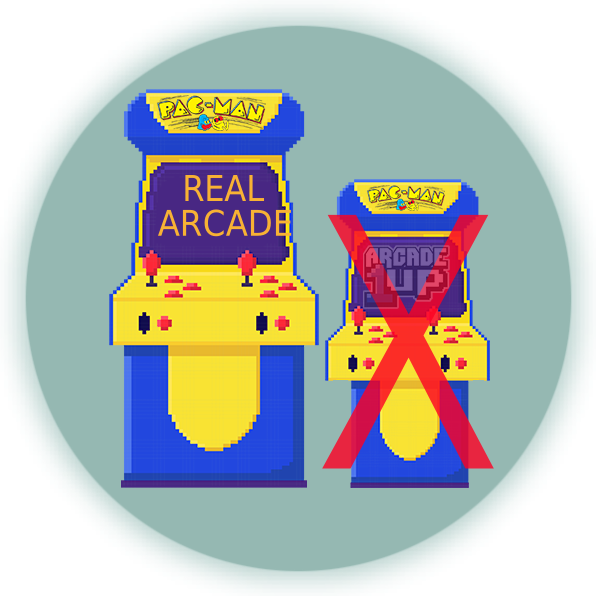
REAL ARCADE MACHINES
We rent real arcade machines, not Arcade1Up toys from walmart.
WE ARE A FLORIDA BASED COMPANY
Always hire a local event company, not a company located out of state! Why? The further a company has to travel the more likely something could go wrong. Most out of state companies work from a rolodex. They put adds in every state and make a nice website creating the illusion they are local, but they’re based in another state such as New York or New Jersey. This is why their price is higher. Did you know they usually subcontract a local company like us because it’s easier and cheaper for them. We love being trusted to do this and we will only give out their business cards so you’d never know. Hire us directly for less!

Smart Recommendations
Trust the company hired by the Ritz Carlton, Four Season, The Breakers, Miami Heat, Orlando Magic, and so many others for their corporate events.
- Party Planners trust us for their gaming entertainment needs.
- Local and out of state DMCs trust us as a reliable vendor.
- DJ companies, Bands, Caterers, Decorators, and even our competitors call us!
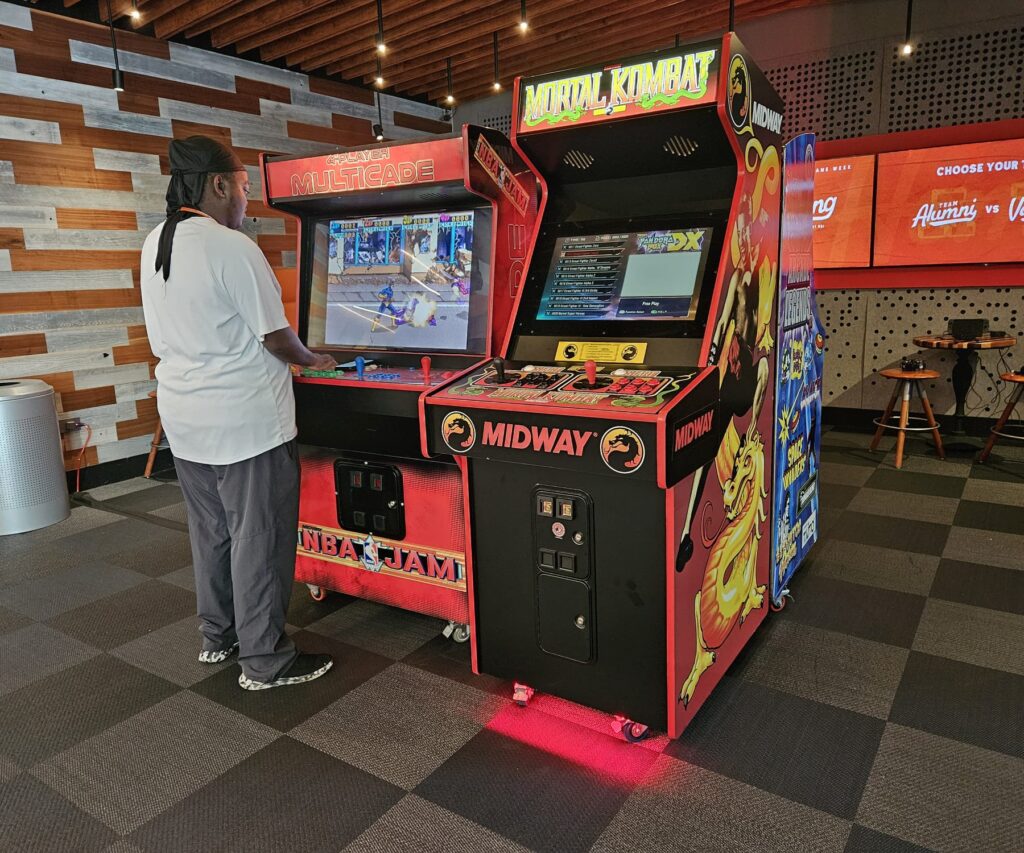

“Rent MORTAL KOMBAT now!"
“Rent MORTAL KOMBAT now!"
A few of our customers: